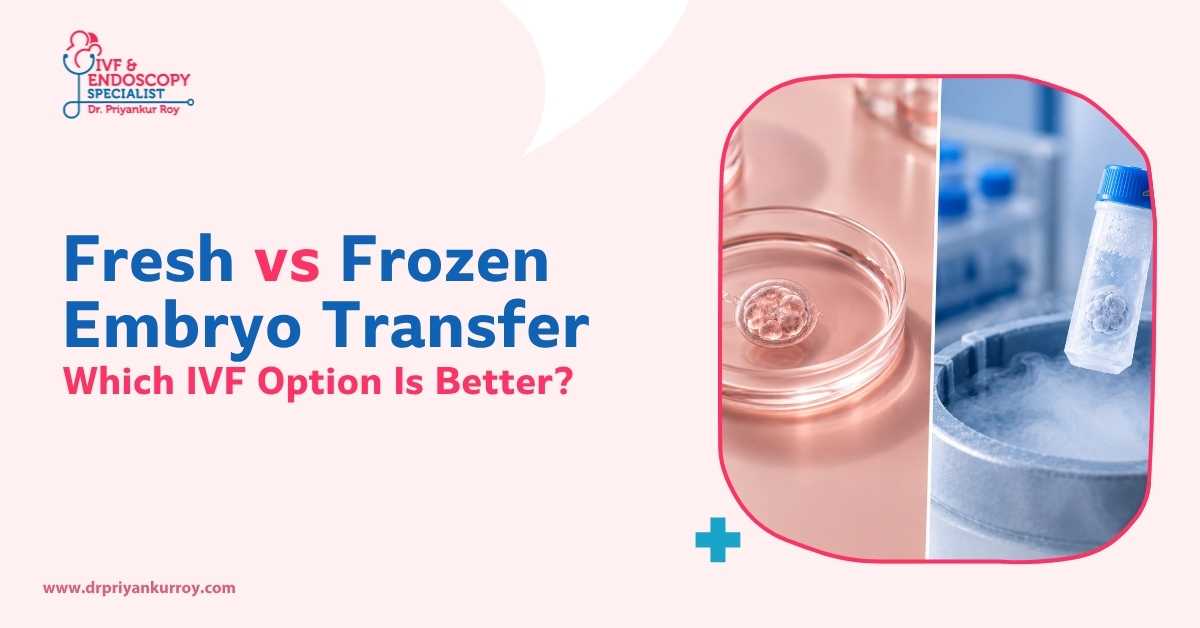


Embryo transfer is an important stage of IVF, where a selected embryo is placed into the uterus. It can be done soon after fertilisation as a fresh embryo transfer or after freezing the embryo for transfer in a later cycle.
Choosing between fresh and frozen transfer is not simply about which has a higher success rate. Doctors consider several factors, including ovarian response, hormone levels, uterine lining, OHSS risk, embryo development, previous IVF history, and the overall treatment plan.
A Siliguri IVF centre can assess your needs and suggest the most suitable embryo transfer option.
Know the Difference Between Fresh vs Frozen Embryo Transfer?
Here are the key differences between fresh and frozen embryo transfer:
|
Factor |
Fresh Embryo Transfer |
Frozen Embryo Transfer |
|---|---|---|
|
Timing |
Same IVF cycle |
Later cycle |
|
Embryo |
Transferred soon after fertilisation |
Frozen, then thawed before transfer |
|
Uterine lining |
Prepared during the IVF cycle |
Prepared separately before transfer |
|
Hormone levels |
Depends on current cycle levels |
Can be planned when levels are suitable |
|
OHSS risk |
May be a concern in some patients |
Transfer can be delayed to reduce certain risks |
|
Embryo development |
Transfer after suitable development |
Embryo is stored after suitable development |
|
Flexibility |
Less flexibility in timing |
More flexibility in timing |
|
Previous IVF history |
Considered when planning transfer |
Also considered when deciding the timing |
|
Treatment plan |
Suitable when current-cycle conditions are favourable |
Useful when a later transfer is more appropriate |
Both options can work well, but the suitable choice depends on your condition and IVF treatment plan. Consulting a best IVF centre in Siliguri can help you make an informed decision.
Understanding Fresh Embryo Transfer
Fresh embryo transfer is an IVF procedure in which a suitable embryo is placed into the uterus during the same IVF cycle as egg collection and fertilisation. The embryo is not frozen before transfer.
Why Is It Important?
The embryo can be transferred without waiting for another cycle. The doctor first checks whether the hormone levels and uterine lining are suitable.
How Does the Process Work?
After ovarian stimulation, the eggs are collected and fertilised in the laboratory. The embryos are monitored, and a suitable embryo is selected for transfer.
The main steps include:
● Egg collection and fertilisation
● Monitoring embryo development
● Checking the uterine lining and hormone levels
● Selecting a suitable embryo
● Transferring the embryo into the uterus using a thin catheter
Factors to Consider
The doctor may consider:
● Hormone levels
● Ovarian response
● Uterine lining
● Embryo development
● Risk of OHSS
● Previous IVF history
Who May Be Suitable for Fresh Transfer?
Fresh transfer may be considered when hormone levels and the uterine lining are suitable, and there is no major concern about OHSS.
When Should a Fresh Transfer Be Avoided?
If hormone levels or the uterine lining are not suitable, or there is a higher risk of OHSS, the doctor may freeze the embryos and plan the transfer for a later cycle.
Understanding Frozen Embryo Transfer
Frozen embryo transfer (FET) is an IVF procedure where an embryo that was frozen after fertilisation is thawed and transferred into the uterus during a later cycle. The transfer does not take place in the same cycle as egg collection.
Why Is It Important?
FET gives doctors more flexibility to choose the timing of embryo transfer. It can be useful when the uterus needs additional preparation or when transferring an embryo in the current IVF cycle may not be ideal.
How Does the Process Work?
First, suitable embryos are frozen and stored after fertilisation. During a later cycle, the uterine lining is prepared and monitored. Once the conditions are suitable, an embryo is thawed and transferred.
The main steps include:
● Preparing the uterine lining
● Monitoring hormone levels and cycle timing
● Thawing a suitable frozen embryo
● Checking the embryo after thawing
● Transferring the embryo into the uterus using a thin catheter
Factors to Consider Before FET
The doctor may consider:
● Uterine lining
● Hormone levels
● Embryo quality and development
● Previous IVF history
● Risk of OHSS
● Overall treatment plan
Who May Be Suitable for Frozen Transfer?
Frozen embryo transfer may be considered when suitable frozen embryos are available, or testing is needed before transfer.
When Might Frozen Transfer Be Preferred?
It may be preferred when OHSS risk is high, hormone levels are unsuitable, or the uterine lining needs more time to prepare.
Which Has a Higher IVF Success Rate: Fresh or Frozen Transfer?
Neither fresh nor frozen transfer is always more successful. There are several factors that can affect the success rate, including:
● Age
● Embryo quality
● Uterine lining
● Hormone levels
● Ovarian response
● Previous IVF history
● OHSS risk
The right transfer method depends on your condition and IVF plan. For IVF in Siliguri, your fertility specialist can guide you on the suitable option.
How Do Doctors Decide Which Option Is Suitable for You?
Doctors consider your condition and IVF cycle before choosing fresh or frozen embryo transfer. They usually look at:
● Hormone levels
● Ovarian response
● Uterine lining
● Embryo development and quality
● OHSS risk
● Previous IVF history
● Overall treatment plan
Based on these factors, the best IVF Center in Siliguri can help you understand whether a fresh or frozen transfer is more suitable for your IVF treatment.
Advantages and limitations of fresh and frozen embryo transfer
Advantages of Fresh Embryo Transfer
● Transfer takes place in the same IVF cycle.
● No freezing or thawing is needed.
● Pregnancy can be attempted sooner.
● Fewer steps are needed before transfer.
● Suitable when hormone levels and uterine lining are favourable.
● May suit some patients with a low ovarian response.
Limitations of Fresh Embryo Transfer
● May not suit patients at high risk of OHSS.
● Hormonal changes may affect the uterine lining.
● Offers less flexibility in transfer timing.
● Transfer may be cancelled if conditions are not suitable.
● Genetic testing may require embryos to be frozen first.
Advantages of Frozen Embryo Transfer
● Transfer can be planned for a later cycle.
● Gives more time to prepare the uterine lining.
● Can reduce OHSS risk in suitable patients.
● Allows genetic testing before transfer when needed.
● Offers more flexibility in treatment timing.
● Useful when hormone levels are not suitable for fresh transfer.
● Frozen embryos can be used for future transfers.
Limitations of Frozen Embryo Transfer
● Pregnancy is delayed until a later cycle.
● Embryos need to be frozen and thawed.
● Requires additional laboratory steps.
● May increase treatment costs.
● Not every embryo may survive thawing.
● Frozen transfer is not always more successful than fresh transfer.
What Are the Latest Trends in Fresh vs Frozen Embryo Transfer?
2025 trial: In women with a low IVF prognosis, fresh transfer had a higher live-birth rate than a freeze-all approach: 40% vs 32%.
2026 systematic review: A review of low responders found that frozen transfer did not provide better reproductive outcomes than fresh transfer.
OHSS prevention: Frozen transfer remains useful when there is a high risk of OHSS because transfer can be postponed until after ovarian stimulation.
Treatment planning: Current evidence does not support using frozen transfer for everyone. The decision depends on ovarian response, IVF prognosis, hormone levels, uterine lining, and OHSS risk.
At The End
Fresh and frozen embryo transfers can both be suitable, depending on the patient's condition, ovarian response, embryo quality, and IVF plan. There is no single best option for everyone.
Your fertility specialist can assess these factors and help you understand which transfer option may be more suitable for your IVF treatment.
In a Siliguri IVF center, Dr. Priyankur Roy is one of the best and most trusted doctors, known for providing personalised fertility care and guidance based on each patient's needs.

Dr. Priyankur Roy
MBBS, MS, PGDMLS, PGDHHM, FIAOG
Dr. Priyankur Roy is a distinguished expert in Infertility Treatment and Gynae-Endoscopy. With advanced qualifications from Germany and the UK, he excels in providing high-quality medical care.
This blog is clinically verified by Dr. Priyankur Roy to ensure accuracy and reliability.