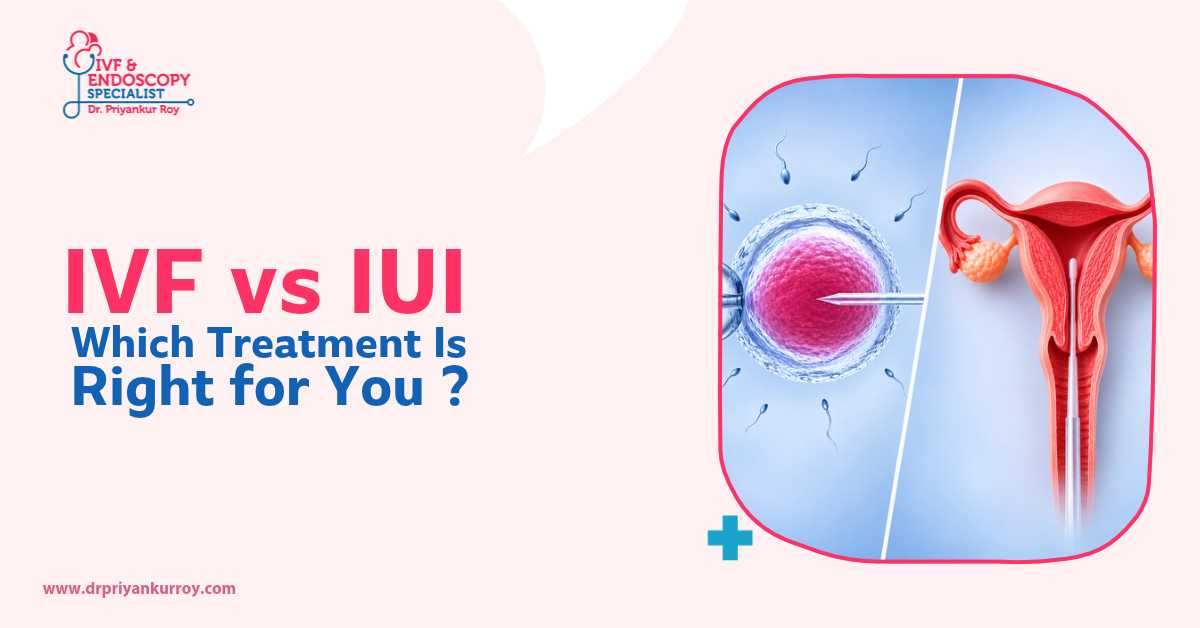





For some couples, getting pregnant takes longer than expected. This may be due to problems with ovulation, sperm health, blocked fallopian tubes, or other fertility conditions. Finding the cause helps the doctor choose a suitable treatment. Both IUI and IVF are used to help people conceive, but the procedures are different. IUI helps sperm reach the egg inside the body, while IVF allows fertilisation to take place outside the body before the embryo is transferred to the uterus. The right option depends on your age, fertility diagnosis, sperm health, fallopian tube condition, and previous treatments. IVF doctors in Siliguri can assess these factors and discuss suitable treatment options with you.
IUI vs IVF: How Do They Differ?
Before comparing the treatments, it helpstounderstand how IUI and IVF differ in their procedures and fertilisation methods.

What Is IUI and How Is It Done?
IUI involves inserting washed sperm into the uterus when an egg is ready for fertilisation. Fertilisation then occurs naturally inside the body.
Steps Involved in an IUI Procedure
- Fertility assessment: The doctor checks ovulation, fallopian tube health, and sperm quality.
- Ovulation monitoring:Ultrasound scans track egg development. Medication may be prescribed if needed.
- Sperm preparation:The semen sample is processed to select healthy sperm.
- Insemination: Prepared sperm is placed in the uterus through a thin tube.
- Pregnancy test: A test is usually advised around two weeks later.
When is IUI suitable?
IUI may be considered for:
- Unexplained infertility.
- Mild male-factor infertility.
- Certain ovulation problems.
- Difficulty with intercourse or ejaculation.
- Couples using donor sperm.
IUI may not be suitable when both fallopian tubes are blocked, or sperm-related problems are severe.
What Is IVF and How Is It Done?
IVF involves fertilising an egg in a lab and transferring the resulting embryo into the uterus.
Steps Involved in an IVF Procedure
- Fertility assessment: The doctor reviews your medical history, hormone levels, ultrasound scans, and semen analysis.
- Ovarian stimulation: Hormone injections help the ovaries produce multiple eggs.
- Follicle monitoring: Ultrasound scans and blood tests track their growth.
- Trigger injection: An injection helps the eggs mature before collection.
- Egg retrieval:Mature eggs are collected under sedation or anaesthesia.
- Fertilisation: Eggs and sperm are brought together in the lab. ICSI may be used when needed.
- Embryo development:The laboratory monitors the fertilised eggs as they develop.
- Embryo transfer: The selected embryo is placed in the uterus.
- Pregnancy test: A blood test is done on the date advised by the fertility team.
When May IVF Be Recommended?
IVF may be considered for people with:
- Blocked or damaged fallopian tubes.
- Severe male-factor infertility.
- Moderate or severe endometriosis.
- Unexplained infertility after other treatments.
- Previous unsuccessful fertility treatments.
- Certain age-related fertility concerns.
A fertility specialist may also recommend IVF earlier when waiting through several IUI cycles could affect treatment chances.
IVF vs IUI Success Rates: Which Treatment Has Better Results?
Factors Affecting IUI Success Rates
Several factors can affect the chances of pregnancy with IUI:
- Cause of infertility: The reason you are having difficulty conceiving.
- Sperm health: Sperm count and movement after preparation.
- Ovulation: Whether eggs develop and release normally.
- Previous treatments: Results of earlier IUI cycles.
Factors Affecting IVF Success Rates
IVF results depend on several factors, including:
- Egg quality: The number and quality of collected eggs.
- Embryo quality: How well embryos develop in the laboratory.
- Sperm health: Its role in fertilisation.
- Uterine health: Conditions that may affect embryo implantation.
- Previous IVF cycles: Results of earlier attempts.
IVF vs IUI: Success Rate Comparison
- IUI generally has lower pregnancy rates per cycle than IVF.
- IVF may be more suitable for certain fertility conditions.
- Pregnancy rates and live birth rates are different.
When comparing results, check whether the figures refer to pregnancy or live birth rates. Your fertility specialist can explain your chances after reviewing your age and medical condition.
What Are the Risks of IVF and IUI?
Both treatments can cause side effects. Some are mild, while others may need medical attention.
Risks and Side Effects of IUI
- Mild cramps or spotting after the procedure.
- Discomfort during insemination.
- A small risk of infection.
- Multiple pregnancies, especially when fertility medicines are used.
- Rare cases of ovarian hyperstimulation syndrome (OHSS).
Risks and Side Effects of IVF
- Bloating, headaches, or mood changes due to hormonal medicines.
- Ovarian hyperstimulation syndrome (OHSS).
- Mild cramps or spotting after egg collection or embryo transfer.
- A small chance of bleeding or infection during egg collection.
- Ectopic pregnancy, when an embryo implants outside the uterus.
- Emotional stress during treatment and waiting periods.
How Do You Decide Between IVF and IUI?
The choice between IVF and IUI depends on the cause of infertility and both partners' medical history. Cost and personal preference also matter, but medical factors should come first.
Consider Your Age and Ovarian Reserve
- Age can affect egg quality and pregnancy chances.
- Ovarian reserve tests show how the ovaries may respond to fertility medicines.
- Delaying treatment may not be advisable for some patients.
Check Fallopian Tube Health
- IUI generally requires at least one open fallopian tube.
- IVF may be considered when both tubes are blocked.
- Your doctor will assess the condition of your fallopian tubes before treatment.
Review Your Fertility Diagnosis
- Mild sperm-related issues may be suitable for IUI in selected cases.
- Severe male-factor infertility may require IVF with ICSI.
- Unexplained infertility, endometriosis, and ovulation disorders need individual assessment.
Consider Previous Treatment History
- Review the results of previous fertility treatments.
- Discuss why an earlier treatment did not work.
- Ask whether another IUI cycle is suitable or IVF may be a better option.
Conclusion
IUI and IVF are two different treatments that can help you get pregnant. IUI places prepared sperm inside the uterus, while IVF involves fertilisation in a laboratory. IUI is usually simpler and less expensive, but IVF may be recommended for blocked fallopian tubes, severe sperm problems, and certain other fertility conditions. Your age, ovarian reserve, sperm health, and previous treatment results all matter when choosing between the two. IVF doctors in Siliguri can assess your reports and explain which treatment may be suitable, including its costs and possible risks.
Frequently Asked Questions
Which Treatment Gives Better Results, IVF or IUI?
IVF often has a higher pregnancy rate per cycle than IUI. Your age, fertility condition, and test results can affect the chances of success.
Which Is More Affordable, IVF or IUI?
IUI usually costs less because it involves fewer steps. IVF costs more due to egg collection, laboratory fertilisation, and embryo transfer.
How Many IUI Rounds May Be Needed?
Some couples conceive after one or two IUI cycles, while others need more attempts. If IUI does not work, the doctor may discuss IVF.
Can I Switch From IUI to IVF?
Yes. You can move from IUI to IVF after discussing it with your doctor. Depending on your age and fertility condition, IVF may also be suggested as the first option.
How Many IVF or IUI Cycles Are Needed?
Some couples conceive in their first cycle, while others need several attempts. The outcome can depend on age, egg and sperm health, and the cause of infertility.

Dr. Priyankur Roy
MBBS, MS, PGDMLS, PGDHHM, FIAOG
Dr. Priyankur Roy is a distinguished expert in Infertility Treatment and Gynae-Endoscopy. With advanced qualifications from Germany and the UK, he excels in providing high-quality medical care.
This blog is clinically verified by Dr. Priyankur Roy to ensure accuracy and reliability.